Hardwood Refinishing vs. Replacement in Calgary: Costs, Signs and What Makes Sense
We charge $3 to $7 per square foot to sand and refinish hardwood in Calgary.
If your hardwood floor is scratched, faded, dull or starting to show gaps, replacing it isn’t necessarily the right option. Flooring Experts Calgary sands and refinishes hardwood across Calgary, and this guide covers when refinishing makes sense.
In many Calgary homes, the existing hardwood can be repaired and refinished for considerably less than installing a new floor. The important part is figuring out whether the floor still has enough life left in it to make refinishing worthwhile.
A floor with surface scratches and a worn finish may only need sanding and refinishing. A floor with badly damaged boards, moisture problems or very little material left for sanding is a different story.
Calgary’s dry winters also deserve some attention. Changes in indoor humidity can cause hardwood to shrink and expand, which is one reason you may notice gaps at certain times of the year.
Here’s how to decide between refinishing, repairing and replacing your hardwood, along with some realistic Calgary pricing to use when you’re getting quotes.
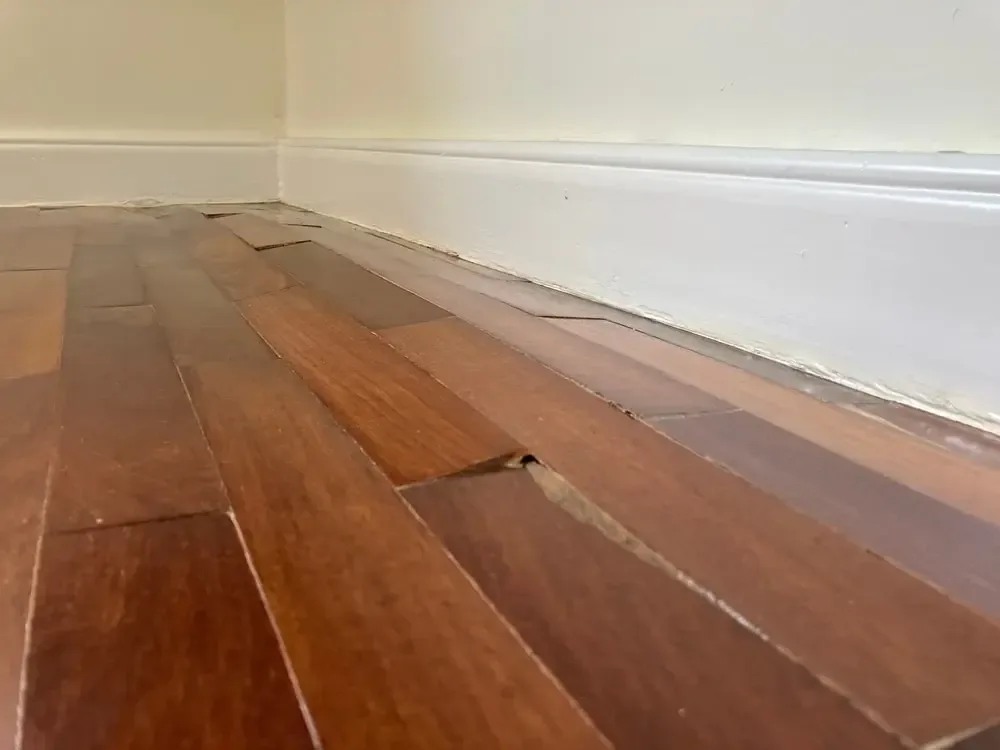
Hardwood Refinishing vs. Replacement: At a Glance
| Option | Our Price* | When It Fits |
|---|---|---|
| Screen and recoat | $1.50-$3.00/sq. ft. | Dull finish and light wear |
| Sand and refinish | $3.00–$7.00/sq. ft. | Scratches, worn finish and some staining |
| Board repair + refinishing | Depends on damage | Localized damaged boards |
| New hardwood | $6-$15/sq. ft. | Floors that are no longer practical to refinish |
| LVP installation | $6–$12/sq. ft. installed | Basements and other areas where moisture resistance is a priority |
*We charge based on your written quote. Floor condition, project size, repairs, materials, access and preparation set the final price.
How Much Does Hardwood Refinishing Cost in Calgary?
The rate above is for a straightforward sand-and-refinish job.
Some floors cost more than that. A small room can have a higher effective cost because there is less floor to spread the setup and labour over. Stairs, repairs, staining and difficult access can also add to the price.
For example, 500 square feet at $4–$6 per square foot puts the basic refinishing work at $2,000–$3,000.
The final quote may also include or account for:
- Moving or protecting furniture
- Board repairs or replacement
- Pet stains
- Water damage
- Stairs and landings
- Staining
- Extra preparation
- Additional finish coats
- Small or difficult-to-access areas
When comparing quotes, make sure you know what is included. A $4-per-square-foot quote isn’t necessarily cheaper than a $5 quote if the first contractor has left out several parts of the job.
Screen and Recoat vs. Full Refinishing
A screen and recoat is not the same thing as sanding and refinishing.
A screen and recoat is a maintenance option for a floor where the wood is still in good shape but the finish has become dull or lightly scratched. The existing finish is lightly abraded and another coat of finish is applied.
A full refinish involves sanding the existing finish and enough of the wood surface to remove deeper wear and imperfections before applying the new finish.
If the scratches have gone through the finish and into the wood, a screen and recoat generally won’t be enough.
This is one reason it’s worth having the floor looked at before deciding which service you need. You don’t want to pay for a full sanding if a recoat would have done the job, but you also don’t want to recoat a floor that needs to be sanded.
When Should You Refinish Hardwood Instead of Replacing It?
Refinishing is usually worth considering when the underlying floor is still in good condition.
Look for things such as:
- Solid, stable boards
- Scratches that are mostly cosmetic
- A worn or damaged finish
- Localized stains or damaged boards
- A floor that hasn’t already been aggressively sanded
- A species and layout you still like
Age by itself isn’t a reason to replace hardwood.
Older hardwood floors can sometimes be excellent candidates for refinishing because the original flooring is well made and can have plenty of usable material remaining.
The important question is what condition the floor is in today, not simply how old it is.
When Does Hardwood Need to Be Replaced?
Replacement starts to make more sense when the problems go beyond the finish and individual repairs.
Examples include:
- Extensive water damage
- Severe warping or buckling
- Rot or structural deterioration
- Widespread board failure
- Too little material remaining for another sanding
- Serious subfloor problems
- Repairs that would involve replacing a large portion of the floor
Even then, don’t assume that a damaged section means the entire floor has to go.
A flooring contractor may be able to replace individual boards or a small section and then sand and refinish the floor so the repair blends in with the surrounding wood.
Whether that makes financial sense depends on the extent of the damage and how well the replacement material can be matched.
What About Water Damage?
Water damage is one of the situations where appearance can be misleading.
Cupping, buckling, dark staining, soft boards and persistent odours can all point to moisture problems, but the visible damage is only part of the issue.
The source of the moisture needs to be dealt with before refinishing or installing new flooring.
For example, if hardwood near a patio door has been repeatedly exposed to water, replacing the damaged boards without dealing with the source of the moisture may only postpone the problem.
The cost of repairing a damaged board also varies considerably. The price isn’t just the cost of a piece of wood. The contractor may have to remove surrounding boards, find a suitable match, fit the replacement and refinish the area.
That’s why a fixed per-board price doesn’t tell you much without seeing the floor.
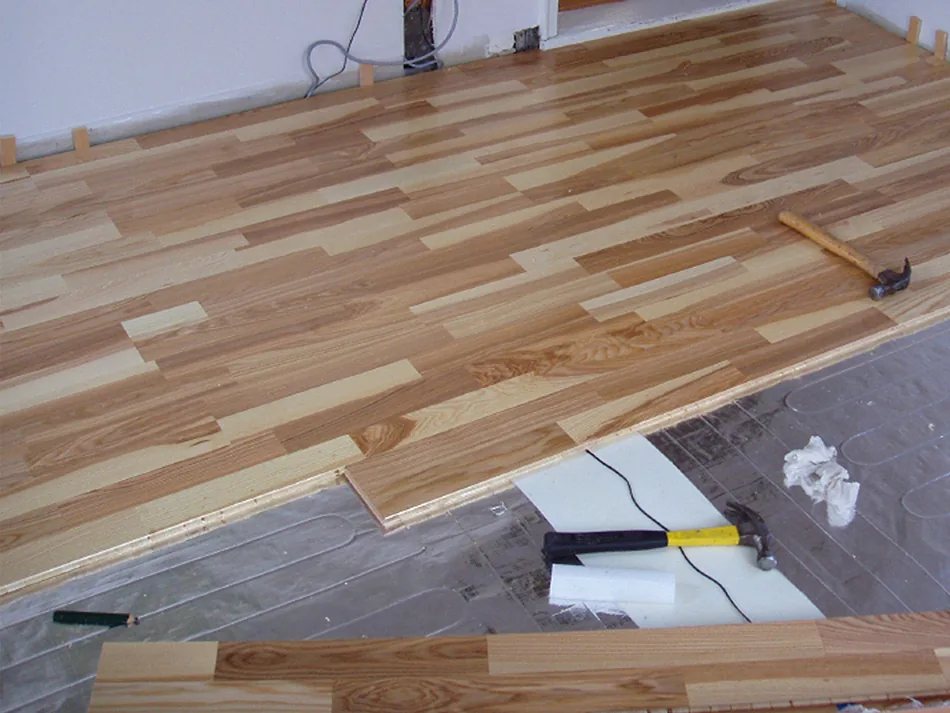
Does Calgary’s Climate Affect Hardwood Floors?
Yes.
The main factor is indoor humidity rather than cold temperatures by themselves.
Wood naturally responds to changes in moisture. During Calgary’s dry winter months, hardwood can lose moisture and shrink. That can result in small gaps between boards that become less noticeable when indoor humidity rises again.
Seasonal movement isn’t necessarily a sign that the floor needs to be replaced.
On the other hand, large or persistent gaps, cupping, crowning and buckling deserve a closer look.
Keeping indoor relative humidity in an appropriate range can help reduce excessive movement. A commonly recommended range for wood flooring is around 30–50% relative humidity, although the flooring manufacturer’s requirements should take priority.
A finish protects the surface of the wood. It doesn’t stop the wood itself from responding to changes in humidity.
Should You Replace Basement Carpet With LVP?
In a basement with carpet over concrete, vinyl plank is the usual replacement, at $6 to $12 per square foot installed (500 sq. ft. × $6 to $12 = $3,000 to $6,000). Our guides to replacing carpet with vinyl plank in Calgary and to luxury vinyl flooring cost cover the slab checks, prep and pricing.
How to Compare Flooring Quotes
When you’re comparing contractors, don’t focus only on the number at the bottom of the quote.
Ask each one:
- Is the price for labour only or supply and installation?
- Is demolition included?
- Is disposal included?
- How much floor preparation is included?
- Are hardwood board repairs included?
- How many coats of finish are included?
- What finish product will be used?
- Are stairs priced separately?
- Is furniture moving included?
- What happens if additional damage is found after work begins?
The more clearly the scope is written out, the easier it is to compare quotes.
A cheaper quote can become the more expensive option if preparation, repairs or other necessary work are added later.
Three Examples of What the Numbers Can Look Like
Here are a few simple examples to show how the math works.
Example 1: Hardwood Refinishing
A 600-square-foot oak floor has a worn finish and moderate surface scratching, but the boards are otherwise in good condition.
At $4.50–$5.00 per square foot, the basic refinishing work costs $2,700–$3,000.
If the floor also needs board repairs, staining or other work, the total would increase.
Example 2: Hardwood With Repairs
A 750-square-foot floor needs sanding and refinishing, but several boards near an exterior door have water damage.
The refinishing portion costs $3,400–$3,800, with board replacement and moisture-related repairs added separately.
Example 3: Basement Carpet to LVP
A 600-square-foot basement has carpet over a concrete slab. The slab is generally suitable for LVP but needs some preparation.
At $8–$10 per square foot, the basic flooring installation costs $4,800–$6,000, before any major leveling or moisture remediation.
The point of these examples is simple: the condition of the floor and the amount of preparation can matter just as much as the square footage.
DIY Hardwood Refinishing: Where People Get Into Trouble
Hardwood refinishing can look like a straightforward DIY project when you see the rental price for a floor sander.
The sanding itself is where things can go wrong.
A drum or belt sander removes material quickly. Holding it in the wrong position, using the wrong grit or stopping in the wrong place can leave gouges or uneven areas that become very noticeable after staining or finishing.
Getting an old floor flat and consistent is often harder than it looks.
LVP is generally more approachable for DIY installation, but preparation still matters. Click-lock flooring needs a suitable, reasonably flat substrate. Installing it over an uneven concrete floor can result in movement, gaps or problems with the locking joints.
In both cases, the preparation is often the part that determines how good the finished floor looks.
A Simple Decision Guide
Refinish when the hardwood is structurally sound, has enough material remaining and the main problem is surface wear.
Repair and refinish when a relatively small number of boards are damaged but the rest of the floor is worth keeping.
Replace when the floor has extensive structural or moisture damage, cannot safely be sanded again or would require so many repairs that replacement is the more practical option.
Consider LVP when replacing basement carpet or another floor where easy maintenance and moisture resistance are priorities, provided the subfloor meets the product requirements.
The Bottom Line
Don’t decide between refinishing and replacement based only on the age of the hardwood or a price-per-square-foot number.
Look at the condition of the boards, how much material remains for sanding, whether there has been moisture damage and what condition the subfloor is in.
If the floor is fundamentally sound, refinishing can give an old hardwood floor a completely different appearance without the cost and disruption of replacing it.
If only a few boards are damaged, repair and refinishing may be enough.
And if you’re replacing carpet in a Calgary basement, LVP can be a practical choice, but the concrete and moisture conditions should be checked before installation.
When you get quotes, focus on the scope of work, not just the price. A good quote should tell you what is included, what isn’t and what could cause the price to change.
Frequently Asked Questions
Is it cheaper to refinish or replace hardwood floors?
For a floor that is still in good structural condition, refinishing is usually less expensive than installing new hardwood. The final price depends on the floor and the amount of work required.
How do I know if my hardwood can be refinished?
The floor should be assessed for its construction, remaining material, previous sanding, board condition and moisture damage. A worn finish and surface scratches are generally much easier to address than structural damage.
Are gaps between hardwood boards a sign that the floor needs to be replaced?
Not necessarily. Hardwood can shrink during Calgary’s dry winter months and expand again as indoor humidity changes. Persistent or unusually large gaps, especially when combined with cupping or buckling, should be inspected.
Is LVP suitable for a Calgary basement?
It can be. LVP is commonly used in basements, but the concrete slab still needs to meet the flooring manufacturer’s requirements for moisture, flatness and installation.
Is waterproof LVP waterproof?
Some LVP products are designed and rated as waterproof, but that doesn’t mean the basement itself is protected from water intrusion. Moisture coming through the slab, walls or other parts of the building still needs to be dealt with.
Does a screen and recoat remove deep scratches?
No. A screen and recoat is primarily intended to refresh the existing finish. Scratches that extend into the wood usually require sanding and refinishing.
How much does hardwood refinishing cost in Calgary?
We charge $3–$7 per square foot for straightforward sand-and-refinish work. Repairs, stairs, staining, small project sizes and difficult floor conditions can increase the price.
How much does LVP installation cost in Calgary?
We charge $6–$12 per square foot installed. The final cost depends on the product, demolition, concrete or subfloor preparation and installation requirements.