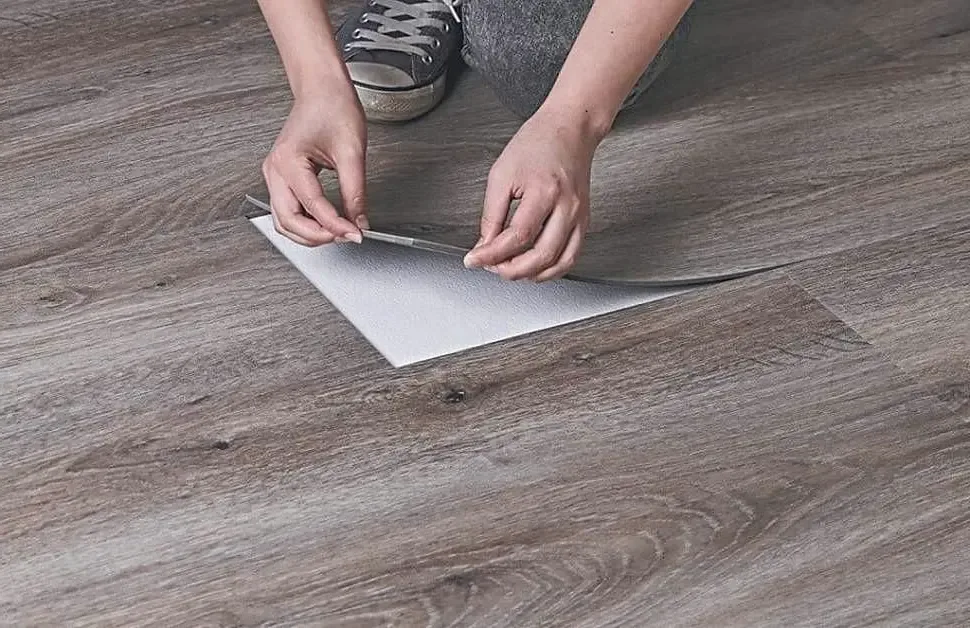
Sheet and tile formatsFull adhesive bondWelded seams
Linoleum Flooring Calgary Installation
Real linoleum is a bonded floor, not a floating one. It rewards a flat, dry, properly prepared substrate and it punishes a rushed one, so preparation is where most of the value in the job sits.
Substrate flatness and moisture assessed first
Adhesive, rolling and cure time planned
Seams, coving and edges detailed in the scope
Request a Linoleum Flooring Quote
Send the rooms and dimensions, what is on the floor now, whether the space is on a slab, and whether you are after sheet or tile.
Substrate preparation is quoted separately from the linoleum installation. Both are measured, not estimated by phone.
Our Process
How a linoleum flooring installation runs
1
Measure and choose the format
Room dimensions, seam positions and whether sheet goods, tiles or planks suit the layout, the traffic and the budget.
2
Prepare the substrate
Remove the old floor, correct flatness, patch and skim where required, then confirm the surface is clean, sound and dry enough to bond to.
3
Lay, adhere and roll
Fit and relax the material, apply the specified adhesive at the right open time, then roll the floor to get a full bond with no trapped air.
4
Seams, edges and cure
Weld or seal the seams, complete coving and transitions where specified, then protect the floor through the cure period before normal use.
What a linoleum flooring quote should name before work starts
The actual product
Linoleum or vinyl, sheet or tile, gauge and whether a factory surface treatment is included. These are frequently confused and they are not interchangeable.
Substrate preparation scope
What is being removed, what is being patched or levelled, and what the surface has to reach before adhesive is opened.
Adhesive and method
The adhesive the manufacturer specifies, the open time it needs, and confirmation the floor will be rolled rather than just walked in.
Seam treatment
Where the seams fall, how they are welded or sealed, and whether coving up the wall is part of the job.
Cure and return to service
When you can walk on it, when furniture and appliances can come back, and when it can first be wet cleaned.
Linoleum flooring needs a flatter substrate than plank
A plank floor bridges small imperfections. A sheet floor telegraphs them. Linoleum is bonded across its whole underside, so every trowel ridge, fastener head, patch edge and low spot in the substrate eventually shows as a line or a shadow in the finished surface, usually once the light hits it from the side. That is why the preparation stage on a linoleum job is longer than people expect and why we measure flatness rather than eyeballing it. Where levelling is needed, Calgary planning ranges sit around $2 to $6 per square foot in Canadian dollars, and removing the existing floor around $1 to $3. Those are planning figures for budgeting, not quotes, and we would rather tell you the substrate needs work before the material is ordered.
Linoleum flooring is not vinyl, and it does not install like vinyl
Flooring Experts Calgary installs linoleum flooring in homes and commercial spaces across Calgary, Alberta, in both sheet and tile formats. In common use the word covers anything in a roll. In the trade it means a specific material: linseed oil, wood or cork flour, resins and mineral fillers pressed onto a jute backing. Luxury vinyl and vinyl sheet are plastic products and behave differently in almost every respect that matters to an installer.
Linoleum is bonded across its full underside with a specified adhesive, it needs to be rolled to achieve that bond, its seams are welded or sealed rather than simply butted, and it has a cure period before the room goes back into normal service. A floating vinyl plank floor asks for none of that. If you have priced the two against each other and the numbers looked similar, one of the quotes was probably missing the preparation.
Fresh linoleum often looks yellow or hazy when it is first unrolled, because the linseed oil oxidises in the dark. It clears once daylight reaches it, usually over days to weeks depending on how much natural light the room gets. That is ambering, it is expected, and it is not a fault.
Substrate preparation under linoleum flooring in Calgary
Sheet goods are unforgiving of the substrate. Bonded across the whole surface, linoleum takes the shape of what it is stuck to, and side light finds every trowel ridge, fastener head, patch edge and low spot months later.
So the preparation stage carries the job. That means lifting the existing floor rather than covering it in most cases, filling and skimming where the surface is broken, and levelling where the substrate is genuinely out of flat. In Calgary that last point comes up often in basements and older commercial spaces, because expansive clay under this city moves basement slabs considerably more than it moves footings, and heaved or cracked slabs are far more common than foundation damage.
In Calgary buildings from before about 1980 there can be vinyl-asbestos tile under whatever is currently on the floor. If we find it, we stop and refer you to a licensed abatement contractor. Identification is where our involvement ends.
Linoleum flooring seams, coving and Calgary winter grit
Where the seams land is a design decision, not an accident of the roll width. We plan them away from doorways and heavy traffic lanes where the layout allows, then weld or seal them so there is no open joint for water to find. In commercial and wet-adjacent spaces, coving the material up the wall removes the floor-to-wall joint entirely.
After that, the floor's lifespan comes down to grit. When Calgary road temperatures fall below -5C the City uses pickle, about 3% salt and 97% fine gravel, and that gravel arrives indoors on boots all winter. It is abrasive, and on a resilient floor it is the main thing dulling the surface. Deep walk-off matting at the entries and regular removal of the grit will do more for the floor over ten years than any upgrade on the sample card.
Linoleum flooring questions from Calgary homeowners and businesses
Is linoleum the same thing as vinyl?
No, though the words get used interchangeably in stores. True linoleum is made from linseed oil, wood or cork flour, resins and mineral fillers on a jute backing. Vinyl and luxury vinyl are plastic-based products. They install differently, they wear differently and they are maintained differently, so the first thing we confirm on any enquiry is which one you actually want.
Why does new linoleum look yellow or hazy at first?
That is normal and it is called ambering. Linseed oil oxidises in the dark of a sealed roll and lightens again once the floor is exposed to daylight. It usually clears over days to weeks depending on how much natural light the room gets. It is not a defect and it is not a reason to reject the material.
Can linoleum be installed over my existing floor?
Sometimes, if the existing surface is well bonded, flat and suitable to adhere to. More often it is cheaper and more reliable to remove it, because linoleum bonds across its whole underside and shows whatever is beneath it. In pre-1980 Calgary buildings there is also the possibility of vinyl-asbestos tile under the current floor. If we identify it, we stop work and refer you to a licensed abatement contractor. That is not work we do.
How does linoleum hold up to Calgary winters?
The material handles the traffic well, but the grit is the thing to plan for. Below -5C the City spreads pickle on the roads, roughly 3% salt and 97% fine gravel, and that gravel gets tracked in for months. It is abrasive on any resilient floor. Walk-off matting at every entry and a maintenance routine that keeps the grit off the surface do more for the floor's life than any product upgrade.
Do you supply linoleum or do I buy my own?
Either. A lot of people searching for linoleum are looking to buy rolls, and we are not a store. What we do is install it properly, including substrate preparation and seam work, whether the material comes through us or you have already sourced it.
How soon can we use the room?
That depends on the adhesive and the product, and it is one of the items the scope should state up front. Bonded floors need their cure time before heavy furniture returns and before the first wet clean. Rushing it is the most common way a good installation gets damaged.
Get the substrate assessed before your linoleum is ordered
Send the rooms, the existing floor and whether it sits on a slab or a wood subfloor, and we will come back with preparation and installation priced as separate lines.
To provide the best experiences, we use technologies like cookies to store and/or access device information. Consenting to these technologies will allow us to process data such as browsing behaviour or unique IDs on this site. Not consenting or withdrawing consent, may adversely affect certain features and functions.
Functional
Always active
The technical storage or access is strictly necessary for the legitimate purpose of enabling the use of a specific service explicitly requested by the subscriber or user, or for the sole purpose of carrying out the transmission of a communication over an electronic communications network.
Preferences
The technical storage or access is necessary for the legitimate purpose of storing preferences that are not requested by the subscriber or user.
Statistics
The technical storage or access that is used exclusively for statistical purposes.The technical storage or access that is used exclusively for anonymous statistical purposes. Without a subpoena, voluntary compliance on the part of your Internet Service Provider, or additional records from a third party, information stored or retrieved for this purpose alone cannot usually be used to identify you.
Marketing
The technical storage or access is required to create user profiles to send advertising, or to track the user on a website or across several websites for similar marketing purposes.