Bragg Creek service areaFoothills propertyWood and engineered floors
Flooring in Bragg Creek, Alberta
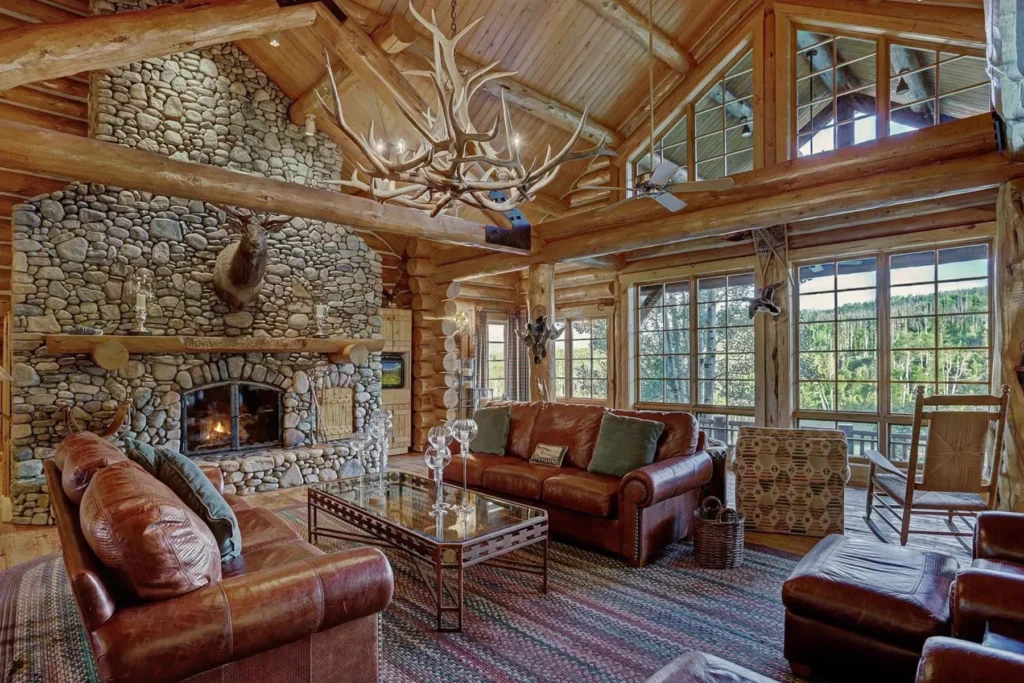
The kind of property we are usually asked about here already has timber, stone and a good deal of exposed wood in the room. Putting a new floor into that, in a climate this dry, is mostly a selection problem.
Engineered construction for wide plank looks
Colour matched against existing timber
Floors planned for intermittent occupancy
Request a Bragg Creek Flooring Quote
Tell us the rooms and approximate sizes, what is on the floor now, how the building is heated between visits, and send a photo of any timber or stone the floor has to sit beside.
Colour and grain matching is assessed against samples in the actual room light. Measurements are needed before any figure becomes a quote.
Why width is the decision
A wide board shows dry-air shrinkage that a narrow one hides
Wood gives up moisture in dry air and shrinks across the grain. The percentage is the same whatever the board width, but on a wide plank that percentage becomes a gap you can see from standing height. Heated indoor air across southern Alberta routinely sits well under 30 per cent relative humidity through the winter, below Health Canada’s rough 30 to 35 per cent winter guidance and below the 35 to 55 per cent range the National Wood Flooring Association associates with dimensional stability in wood. If the wide look matters, engineered construction over a cross-laminated core is the usual way to get it without the seasonal gap.
What we ask about a Bragg Creek property before specifying
Foothills properties are not all occupied the same way, and that changes what belongs on the floor.
How the building is heated between visits
A house held at a steady temperature and one that is dropped back between stays give a floor very different conditions. Wood responds to both temperature and humidity, and a bigger swing means more movement.
What is already in the room
Exposed beams, posts, stair treads, railings and stone hearths set the tone. New flooring either matches them deliberately or contrasts with them deliberately, and the sample has to be looked at in that room's own light.
The entry and the boot room
Properties here take mud, snow, gravel and firewood through the door. The surface at that door is a different specification from the one in the main living space.
Level changes and substrates
Split levels, landings, hearth kerbs and floors built over crawl spaces all need the finished height worked out before material is ordered, not after it arrives.
Delivery and where material waits
Where flooring can be unloaded, stored and held at room conditions before installation. It should acclimate in the space it is going into, rather than in an unheated outbuilding.
Flooring Experts Calgary provides flooring installation and repair to homeowners and businesses across Bragg Creek, Alberta.
The wide board question, answered by construction rather than species
Bragg Creek sits in the foothills, and the properties we are asked about here tend to have a lot of wood already visible: beams, posts, treads, sometimes whole walls. A new floor has to hold its own against that, and the instinct is almost always to go wide.
The obstacle is the air. Across southern Alberta, heated indoor humidity through the winter routinely drops well under 30 per cent, which is under Health Canada's rough 30 to 35 per cent winter guidance and under the 35 to 55 per cent range the National Wood Flooring Association associates with stable wood. Boards shrink across the grain in those conditions. A narrow board shrinks by the same percentage as a wide one, but only the wide one turns that percentage into a visible line at every joint.
So the answer is usually construction rather than species. An engineered plank over a cross-laminated core holds its width far better than solid wood of the same size, and that is what makes a genuinely wide floor sensible here. Solid wood is not ruled out. It just does better at a moderate width, and it rewards a house where humidity is actually managed rather than ignored.
Floors in a building that is not lived in every week
Not every property here runs on the same schedule, and a floor notices.
A house held at a steady temperature through the winter gives its floor an easy time. A building that gets dropped back between stays and then brought up sharply asks the wood to move further and faster, and repeated hard cycling is where cupping, gapping and stressed joints come from. Intermittent occupancy changes the product we would specify, so tell us the heating pattern when you request a quote.
Practical things follow from it. Holding a modest baseline heat rather than switching off entirely, running humidity control that is set for the heating season rather than left on a default, and choosing a product with a track record in swinging conditions all do more than any upgrade in board thickness.
Matching new wood to timber that is already in the room
Colour matching gets promised too easily. The material already in the room has been changing for years, under light and heat, and the new floor has not.
What we do instead is bring samples into the actual space, look at them against the beams and the stair at different times of day, and be direct about how close the match will be. Sometimes the right decision is a deliberate contrast, because a near miss reads worse than an honest difference. Sheen matters as much as colour here, since a satin floor beside an oiled beam reads differently from a gloss one even in the same tone.
Then the entry gets its own conversation. Mud, snow, gravel and firewood all arrive through the same door, and the surface that takes that is rarely the surface you want running through the rest of the building.
Wood flooring questions from Bragg Creek properties
Can I have a wide plank floor in a house this dry?
Yes, but the construction matters more than the species. A wide solid board in dry heating-season air will show seasonal gaps at the joints. Engineered plank over a cross-laminated core is far more stable across its width, which is why most wide floors specified for this climate are engineered.
The property is empty for weeks at a time. Does that affect the floor?
It can. A building that is dropped back to a low temperature and then brought up again puts the floor through a wider swing than a house that is lived in continuously. Holding a steadier baseline, and managing humidity rather than only temperature, is what keeps movement within what the product is built for.
Can new flooring be matched to existing beams and stair treads?
It can be brought close, and that is the honest way to put it. Species, cut, stain and sheen all get compared against a sample in the actual room. Matching an aged, sun-exposed finish exactly is not something anyone should promise, because the existing wood has changed colour over years and the new material has not.
Is solid hardwood the wrong choice out here?
Not at all. Solid wood in a moderate width, properly acclimated and in a house whose humidity is managed through the heating season, does very well and can be sanded and refinished more than once. The trouble comes from pairing the widest possible board with the driest possible winter air.
What planning ranges apply to this kind of work?
For early budgeting we use the site-wide CAD planning ranges of $6 to $15 per square foot for hardwood installation and $3 to $7 per square foot for refinishing an existing wood floor. Both are planning ranges for a budget, not quotes.
Send the Bragg Creek room list and a photo of the timber
The existing wood in the room, the heating pattern and the entry arrangement shape the specification more than the square footage does.
To provide the best experiences, we use technologies like cookies to store and/or access device information. Consenting to these technologies will allow us to process data such as browsing behaviour or unique IDs on this site. Not consenting or withdrawing consent, may adversely affect certain features and functions.
Functional
Always active
The technical storage or access is strictly necessary for the legitimate purpose of enabling the use of a specific service explicitly requested by the subscriber or user, or for the sole purpose of carrying out the transmission of a communication over an electronic communications network.
Preferences
The technical storage or access is necessary for the legitimate purpose of storing preferences that are not requested by the subscriber or user.
Statistics
The technical storage or access that is used exclusively for statistical purposes.The technical storage or access that is used exclusively for anonymous statistical purposes. Without a subpoena, voluntary compliance on the part of your Internet Service Provider, or additional records from a third party, information stored or retrieved for this purpose alone cannot usually be used to identify you.
Marketing
The technical storage or access is required to create user profiles to send advertising, or to track the user on a website or across several websites for similar marketing purposes.