Carpet and underpadOld carpet removed and hauledFree measured quote
Carpet Installation and Replacement in Calgary
Carpet with new underpad is $3 to $8 per square foot installed, plus $1 to $3 per square foot to remove the old carpet and $15 to $60 per step on stairs. We install new carpet and replace worn carpet across Calgary, with the old carpet and pad removed, new underpad fitted and seams planned for every room and staircase. The carpet you choose, the stairs and the subfloor condition set the final figure.
Rooms, halls, basements and stairs
Seams placed out of traffic and window light
Tack strip, transitions and door clearance checked
Request a Carpet Installation Quote
List rooms, stairs, approximate dimensions, current flooring and preferred carpet.
Material quantities and seam placement follow a measured layout, not room area alone.
Carpet replacement
What carpet replacement includes
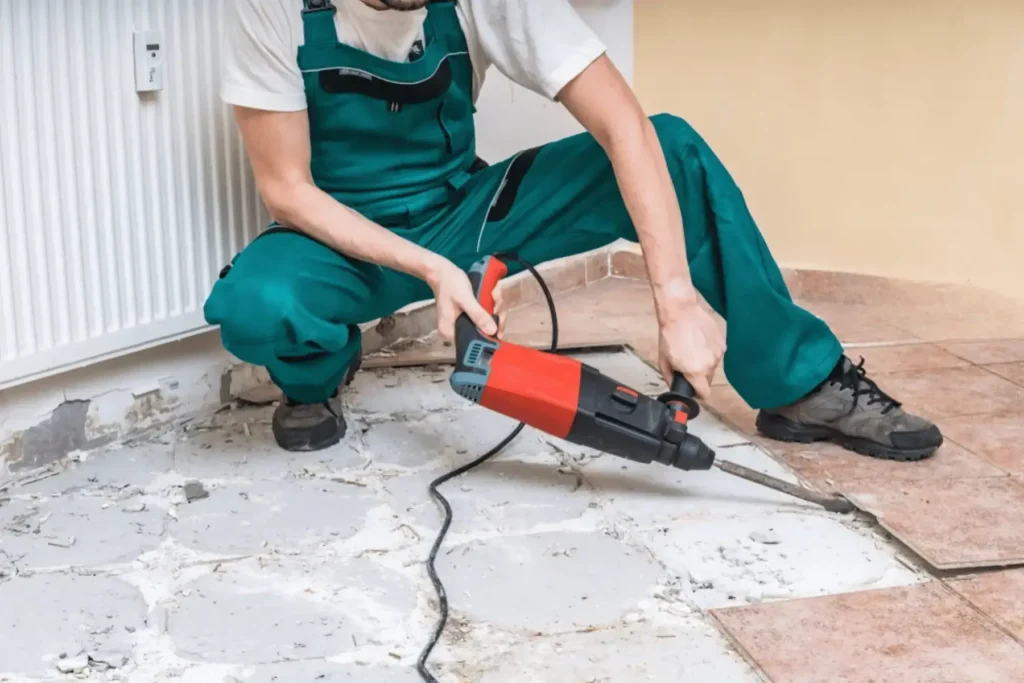
Replacing carpet starts with taking the old one out properly. We lift and haul away the old carpet and underpad, pull the staples, replace damaged tack strip and inspect the subfloor while it is exposed. Panels that squeak or feel soft get fixed at this stage, because once the new carpet is down they are covered for another decade.
Carpet performance comes from the complete fitted system.
Carpet specification
Confirm fibre, construction, pile, backing, width, pattern and manufacturer requirements.
Compatible underpad
Match cushion type and thickness to the carpet, room use and warranty conditions.
Measured seam layout
Plan roll direction, pattern match, seams, closets and waste from actual room dimensions.
Edges and stairs
Review tack strip, thresholds, door clearance, stair construction and transition profiles.
Removal and furniture
State who clears rooms, moves larger items, removes old flooring and handles disposal.
Our Process
Carpet installation sequence, room by room
1
Measure the layout
Record rooms, closets, halls, stairs and roll direction, then place seams out of the main traffic path and away from window light. You see the seam plan before anything is cut.
2
Specify carpet and pad
Confirm both products together with the intended room and fitting method.
3
Clear and prepare
Lift and haul the old carpet and underpad, pull the staples, replace damaged tack strip and fix any subfloor panel that squeaks or feels soft while it is exposed.
4
Fit and finish
Lay the new underpad, fit and seam the carpet, then fit stairs tread by tread with the pile running down and finish transitions and door clearance.
Carpet specifications beyond colour
Fibre and construction
Nylon, polyester, wool and blended products differ, while loop, cut and patterned piles change use and appearance.
Underpad support
Cushion density, thickness and compatibility influence comfort, stability and product requirements.
Seams and roll width
Room geometry, carpet width, pile direction and pattern repeat determine material layout.
Carpet installation and replacement cost in Calgary
Our rates in Canadian dollars. We charge based on your written quote. Carpet, underpad, stairs and the condition of the subfloor set your price.
Most popular
Carpet installation
$3-$8 per sq ft
New carpet and underpad installed with a measured seam plan, tack strip and transitions.
Every job includes a measured seam plan, new underpad matched to the carpet, and tack strip, transitions and door clearance checked before we leave.
Carpet Replacement in Calgary
Carpet replacement means the old carpet, underpad and staples come out before anything new goes down. We lift and haul away the old carpet and pad, pull staples, replace damaged tack strip, and inspect the subfloor while it is exposed. Squeaks get screwed down and soft or water-stained panels get replaced at this stage; see subfloor repair.
Replace the carpet when it is matted, stained through the backing or past its life. When the carpet is sound but rippling, carpet stretching costs far less; when one area is burnt or torn, carpet repair patches it with donor carpet.
Choosing Carpet and Underpad
Choose the carpet for the room's traffic and the underpad the carpet manufacturer approves. Dense, low-pile and loop styles hold up in halls and on stairs; softer cut piles suit bedrooms. A thicker pad is not automatically better: too much cushion lets the backing flex, wears the seams and can void the carpet warranty.
Stairs, Seams and Door Clearance
Seams go where traffic and window light will not cross them, planned from the roll width and room shape before the carpet is cut. Stairs are fitted tread by tread with the pile running down the staircase, and priced per staircase rather than per square foot. New carpet and pad raise the floor, so doors get checked and trimmed where they drag.
Carpet at the Entry: Calgary Winter Grit
Keep carpet away from the front door. The City's pickle mix of 3% salt and 97% fine gravel comes indoors on boots all winter and grinds into carpet fibres at the entry first. A hard surface such as tile or vinyl plank at the door, with carpet starting past the entry, keeps the carpet looking newer for longer.
What Your Carpet Quote Includes
Removal and disposal of the old carpet, underpad and staples
Tack strip replacement and subfloor repairs
New underpad, carpet and a measured seam plan
Stairs, transitions and door trimming
Furniture moving if you want it
We charge $3 to $8 per square foot in Canadian dollars for carpet installation, before stairs, removal and furniture moving. Our carpet installation cost guide breaks the price down by carpet type, stairs and removal, and the flooring cost page covers other floors.
Carpet installation and replacement questions in Calgary
Do you remove and dispose of the old carpet?
Yes. Removal is its own line on the quote: we lift the old carpet and underpad, pull the staples and haul everything away for $1 to $3 per square foot.
Should I replace the underpad when I replace the carpet?
Yes. Old underpad is compressed and often stained, and carpet manufacturers set the cushion their warranty requires. New pad goes in with every replacement.
Where will the seams be?
Out of the main traffic path and away from direct window light, planned from the roll width before cutting. Rooms wider than the roll need a seam, and we show you where it sits before installation.
How are carpet stairs priced?
Per step, not per square foot: carpet stairs are $15 to $60 per step. Each tread, riser and nosing is fitted separately, and open-sided or pie-shaped stairs take longer.
Can my carpet be stretched instead of replaced?
Yes, if the carpet is clean, sound and only rippling. Restretching removes waves for a fraction of the cost of replacement.
Do I need to move my furniture?
No. Furniture moving is an add-on, and a $200 to $600 flat fee applies. Please clear electronics, fragile items and the contents of drawers and shelves before we arrive.
Is carpet a good choice for a Calgary basement?
Yes over a dry, sound slab. We check the slab for moisture first and use synthetic carpet with a pad suited to below grade. If the basement has a history of water, vinyl plank is the safer choice.
What does carpet installation cost in Calgary?
Installed carpet and underpad costs $3 to $8 per square foot in Canadian dollars, before stairs ($15 to $60 per step), removal ($1 to $3 per square foot) and furniture moving ($200 to $600 flat).
Related flooring services
Carpet Stretching in Calgary
Carpet stretching in Calgary for ripples, waves and buckling. Power stretching and re-tensioning to the tack strip, plus why carpet loosens. Get a quote.
Floor removal in Calgary: tear-out of carpet, laminate, vinyl and hardwood, adhesive residue, dust control and bin logistics. Send room details for a quote.
To provide the best experiences, we use technologies like cookies to store and/or access device information. Consenting to these technologies will allow us to process data such as browsing behaviour or unique IDs on this site. Not consenting or withdrawing consent, may adversely affect certain features and functions.
Functional
Always active
The technical storage or access is strictly necessary for the legitimate purpose of enabling the use of a specific service explicitly requested by the subscriber or user, or for the sole purpose of carrying out the transmission of a communication over an electronic communications network.
Preferences
The technical storage or access is necessary for the legitimate purpose of storing preferences that are not requested by the subscriber or user.
Statistics
The technical storage or access that is used exclusively for statistical purposes.The technical storage or access that is used exclusively for anonymous statistical purposes. Without a subpoena, voluntary compliance on the part of your Internet Service Provider, or additional records from a third party, information stored or retrieved for this purpose alone cannot usually be used to identify you.
Marketing
The technical storage or access is required to create user profiles to send advertising, or to track the user on a website or across several websites for similar marketing purposes.