Water-Damaged Floor Replacement Cost in Calgary After a Leak or Flood
Flooring Experts Calgary charges $6 to $12 per square foot installed to replace water-damaged laminate or vinyl plank in Calgary and $6 to $15 for hardwood, plus $1 to $3 per square foot to tear out the wet floor. If the area needs professional drying first, a restoration company does that work and prices it separately.
If a floor has been damaged by a leak or flood, the flooring itself is often only part of the repair.
You may also be paying for water removal, drying, demolition, disposal, subfloor repairs, baseboards, transitions, and installation of the new flooring. In some cases, the flooring can be dried and repaired instead of replaced.
That is why two homes with the same amount of damaged flooring can end up with very different repair bills.
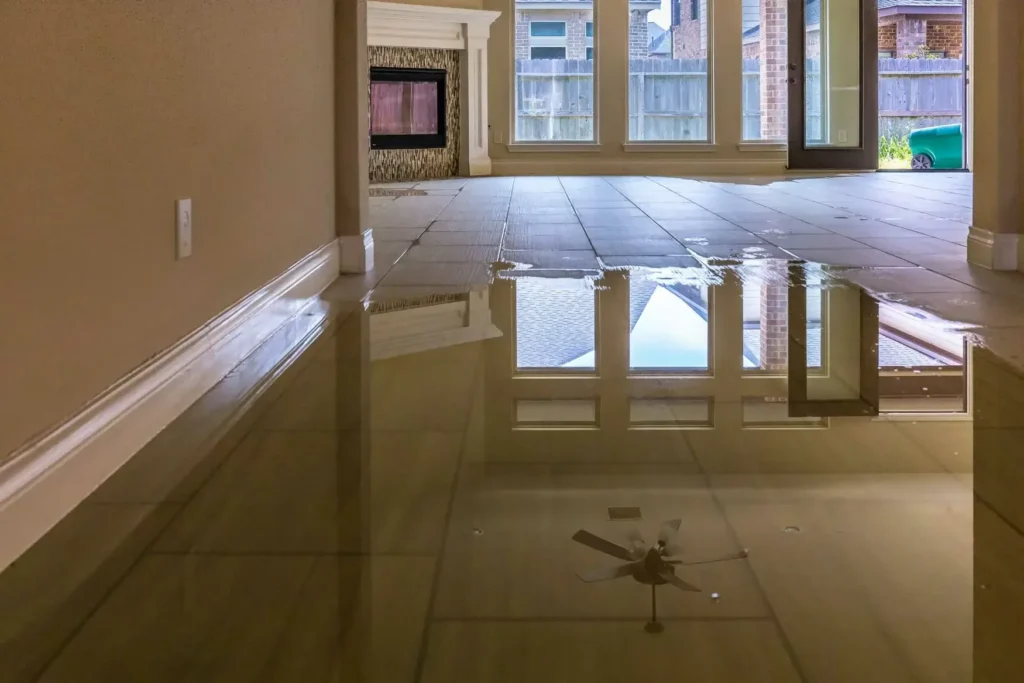
How Much Does It Cost to Replace Water-Damaged Flooring in Calgary?
For ordinary flooring installation, we charge $3 to $25 per square foot installed, depending on the material, product quality and installation method. The table below gives the rate for each material.
Those numbers should not be treated as the total cost of a water-damage repair.
A water-loss project can also include:
- Water extraction
- Drying equipment and monitoring
- Removal of damaged flooring
- Disposal
- Subfloor repairs or replacement
- New underlayment
- Flooring installation
- Baseboards and transitions
- Moving furniture or appliances
- Other repairs discovered after demolition
For example, replacing 500 square feet of laminate after a flood is not the same job as installing 500 square feet of laminate in a dry, empty room with a prepared subfloor.
The flooring may cost only a few thousand dollars. The complete water-damage project can be substantially higher once demolition, drying, disposal, and subfloor work are included.
Calgary flooring price guide
Here is what we list for common flooring types in Calgary. All prices are installed, per square foot.
| Flooring type | Installed price |
|---|---|
| Laminate | $6 to $12/sq. ft. |
| LVP / vinyl plank | $6 to $12/sq. ft. |
| Hardwood, solid or engineered | $6 to $15/sq. ft. |
| Carpet with underpad | $3 to $8/sq. ft. |
| Tile | $8 to $25/sq. ft. |
| Old floor removal and disposal | $1 to $3/sq. ft. |
| Subfloor levelling | $2 to $6/sq. ft. |
Removing the old flooring, subfloor preparation and baseboards are usually priced on top of these rates. Actual quotes vary by product, preparation, layout, demolition, access, and installation method.
Example: 500 square feet of LVP
Using our LVP rate from the table above:
500 sq. ft. × $6 to $12 = $3,000 to $6,000
Tearing out the wet flooring adds $500 to $1,500 (500 × $1 to $3). Subfloor levelling is $2 to $6 per square foot where it is needed, or $1,000 to $3,000 if all 500 square feet need it (500 × $2 to $6). Those figures do not include water extraction, drying, disposal, subfloor replacement, furniture moving, or other restoration work.
That distinction is important after a leak or flood.
Can Water-Damaged Flooring Be Saved?
Sometimes.
The answer depends on four main things:
- What kind of flooring is it?
- What kind of water reached it?
- How long did it remain wet?
- What condition is the material underneath?
A floor that was exposed to a small plumbing leak for a short period is very different from flooring that has been sitting in floodwater.
The source of the water matters too. Clean water from a failed supply line presents a different remediation problem from sewage or other contaminated water.
There is also a difference between flooring that looks bad immediately after a leak and flooring that remains permanently damaged after it has been properly dried.
For that reason, replacement should not automatically be the first step.
How Different Flooring Materials Respond to Water
Hardwood
Hardwood can absorb moisture and develop cupping, crowning, gaps, staining, or buckling.
That does not automatically mean the entire floor needs to be replaced.
If the boards can be dried and remain structurally sound, restoration may be possible. Severely distorted or damaged boards may need to be replaced.
The condition of the subfloor also needs to be checked.
Wood flooring is particularly sensitive to moisture conditions, so installation should follow the flooring manufacturer’s requirements rather than relying on a generic number of drying days.
Laminate
Laminate can be more difficult to recover once water reaches its wood-based core.
Boards that have swollen, delaminated, or permanently changed shape generally cannot be restored simply by drying them.
The amount that needs to be replaced depends on the affected area and whether matching material is still available.
Vinyl Plank
Vinyl plank generally handles surface moisture better than wood-based flooring.
That does not mean the floor assembly underneath is protected.
Water can get beneath the planks through seams, edges, penetrations, or areas where the flooring has been removed. The planks may therefore need to come up so the subfloor can be inspected and dried.
Carpet
Carpet needs to be considered together with the underpad and the material below it.
Whether carpet can be kept depends partly on the type of water involved and how quickly it was dealt with.
Carpet affected by contaminated water presents a different remediation problem from carpet exposed to a clean plumbing leak.
Do not judge whether carpet is suitable for reuse simply by touching the surface and deciding that it feels dry.
Tile
Tile itself is relatively resistant to water, but that does not make the entire floor waterproof.
Water can reach grout, mortar, adhesive, underlayment, or the subfloor underneath the tile.
A tile floor can therefore look fine while there is still a problem below the surface.
The Subfloor Can Change the Cost Dramatically
A major unknown in a water-damage flooring project is what happens underneath the finished floor.
A typical floor assembly might include:
- Flooring
- Underlayment
- Plywood or OSB
- Concrete
- Joists
- Insulation
- Adhesives or other materials
If the finished flooring is damaged but the subfloor can be properly dried and remains suitable for the new flooring, replacement may be relatively straightforward.
If the subfloor is swollen, delaminated, contaminated, deteriorated, or otherwise unsuitable, additional demolition and replacement may be required.
This is why a contractor should not automatically quote subfloor replacement before inspecting it.
It is equally important not to assume the subfloor is fine simply because the finished flooring has been removed.
A good quote should clearly state whether subfloor repairs are:
- Included
- Excluded
- Covered by an allowance
- Or subject to approval after demolition
That makes a large difference when comparing contractors.
Why Small Jobs Can Be Surprisingly Expensive
A 100-square-foot room does not necessarily cost one-tenth as much as a 1,000-square-foot project.
There are fixed costs involved in smaller jobs.
Someone still has to:
- Travel to the property
- Move or protect furniture
- Remove the old flooring
- Load and dispose of debris
- Prepare the surface
- Install the new material
- Replace or reinstall trim
- Clean up
We price removal ($1 to $3 per square foot), subfloor levelling ($2 to $6 per square foot) and baseboards ($2 to $5 per linear foot) as separate items on top of the installed flooring price.
This is why multiplying a material price by the square footage is rarely enough to predict the final bill.
Example: What a Water-Damage Flooring Project Can Include
Consider a basement where a plumbing leak has affected approximately 500 square feet.
The project might involve:
Phase 1: Mitigation
Water is removed and appropriate drying equipment is installed. Moisture conditions are monitored while the affected materials dry.
Phase 2: Demolition
Damaged flooring and underlayment are removed. Some material may be salvageable, while other material may need to be discarded.
Phase 3: Subfloor assessment
The exposed subfloor is inspected.
If it is wet but otherwise sound, it may be dried and retained. If it has significant swelling, delamination, contamination, deterioration, or other damage, sections may need to be replaced.
Phase 4: New flooring
Once the substrate is ready and meets the flooring manufacturer’s requirements, the new flooring can be installed.
Phase 5: Finishing
Baseboards, transitions, thresholds, door clearances, and other finishing work may be required.
The important point is that the flooring installation is only one part of the project.
How Long Does It Take?
There is no universal drying time for a water-damaged floor.
Drying depends on:
- How much water entered the building
- The type of water
- Temperature
- Relative humidity
- Air movement
- The materials involved
- How deeply the water penetrated
- The construction of the floor
- How effective the initial extraction was
A small flooring replacement might take a day or two once everything is dry and ready for installation.
A larger water-loss project can take considerably longer because drying and demolition have to happen before the new floor can be installed.
The important question is not whether the floor has been drying for a particular number of days.
The question is whether the affected materials have reached appropriate moisture conditions for the next stage of the repair.
Don’t Install New Flooring Over a Wet Subfloor
This sounds obvious, but it is an important point after a rushed repair.
Putting new flooring over a wet or unsuitable substrate can create another problem after the original water damage has apparently been fixed.
The flooring manufacturer may also have specific requirements for the moisture condition of the substrate before installation.
For wood flooring in particular, moisture conditions can affect installation and long-term performance.
A contractor should therefore be able to explain what was measured, where it was measured, and why the substrate is considered ready for the selected flooring.
Does Homeowners Insurance Cover Water-Damaged Flooring?
It depends on the policy and the source of the water.
A sudden plumbing failure may be treated differently from long-term seepage, maintenance-related damage, sewer backup, or overland flooding.
Alberta advises homeowners to understand what their individual policy covers and to ask their insurer about water damage, sewer backup, flooding, limits, and exclusions.
Sewer-backup coverage is generally available in Alberta, but coverage is subject to the policy and its limits and exclusions. Overland-flood coverage is also available from some insurers, but homeowners should confirm whether it applies to their property rather than assuming it is included automatically.
If you have experienced a water loss, keep records of:
- Photos and videos
- The source of the water
- When the damage was discovered
- Emergency work performed
- Bills and receipts
- Moisture assessments
- Drying records
- Damaged materials before they are removed, where practical
If you are making an insurance claim, contact the insurer promptly and ask what documentation or authorization is required for emergency mitigation and repairs.
A contractor can document damage and provide an estimate, but the insurer determines coverage under the policy.
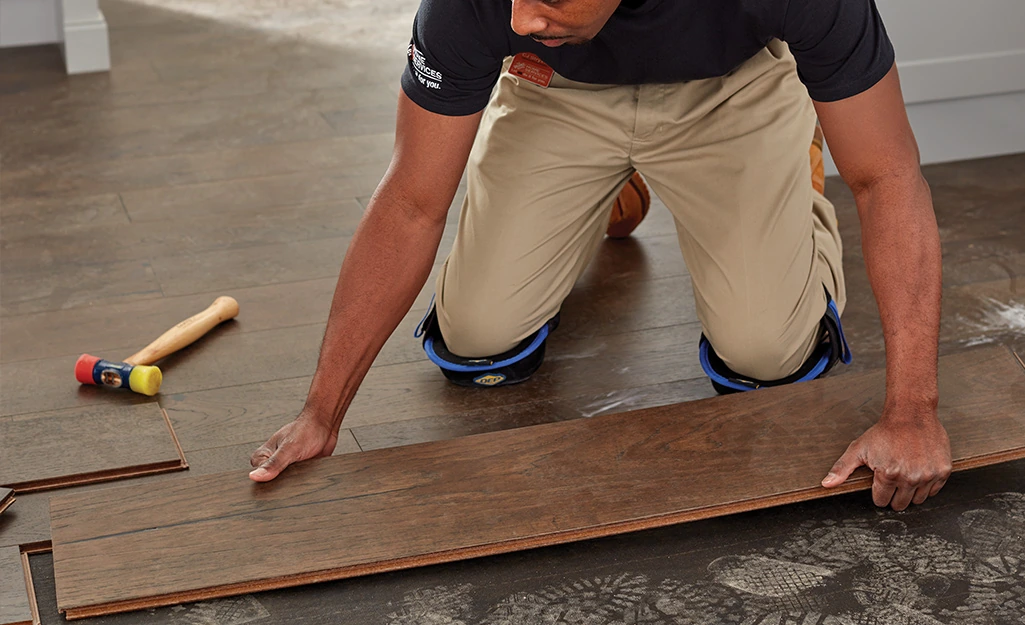
What Should Be Included in a Flooring Repair Quote?
Don’t compare quotes based only on the final number.
Ask each contractor to spell out what is included.
| Item | Included? |
|---|---|
| Water extraction | Yes / No |
| Drying | Yes / No |
| Moisture monitoring | Yes / No |
| Flooring demolition | Yes / No |
| Disposal | Yes / No |
| Subfloor inspection | Yes / No |
| Subfloor repairs | Yes / No |
| Underlayment | Yes / No |
| New flooring | Yes / No |
| Installation | Yes / No |
| Baseboards | Yes / No |
| Transitions | Yes / No |
| Furniture or appliance moving | Yes / No |
| Taxes | Yes / No |
Also ask what happens if additional damage is discovered after the existing flooring comes out.
For example, suppose one contractor’s quote comes in well below another’s.
The lower number is not necessarily the lower-cost option if it excludes demolition, disposal, subfloor repairs, or finishing work that the other contractor included.
The useful comparison is the scope, not just the total.
Questions to Ask a Calgary Flooring Contractor
Before agreeing to the work, ask:
- What exactly is included in the quote?
- Is removal of the existing flooring included?
- Is disposal included?
- Will the subfloor be moisture-tested?
- What happens if damaged subfloor is discovered?
- Is drying included or being handled by another company?
- What exact flooring product is being installed?
- Are underlayment and preparation included?
- Are baseboards and transitions included?
- Are furniture and appliances included in the scope?
- Are taxes included?
- Will additional work require my approval before it starts?
It is also worth getting the product name and specifications in writing.
“Vinyl plank” or “hardwood” is not enough information to compare two quotes. Different products can have very different prices and specifications.
What Should You Do Immediately After a Flooring Leak?
If the leak is still active, stop the source if it is safe to do so.
Then:
- Photograph and video the affected areas.
- Remove standing water where appropriate.
- Move furniture and belongings away from the affected area.
- Contact your insurer if you intend to make a claim.
- Arrange an assessment if water has entered the flooring or subfloor.
- Begin appropriate drying and mitigation.
- Keep receipts and records of the work.
- Do not install replacement flooring until the substrate has been assessed.
If the water may be contaminated, avoid treating the situation like an ordinary clean-water spill. The appropriate cleanup procedure can be different.
How Can You Reduce the Chance of Another Water-Damage Claim?
Replacing the floor addresses the damage. It does not necessarily address why the water got there.
Once the immediate problem has been resolved, identify the source and deal with it.
Depending on the property, that might mean:
- Replacing a failed appliance hose
- Repairing plumbing
- Maintaining the sump pump
- Checking basement drainage
- Installing leak sensors
- Addressing recurring moisture problems
- Reviewing sewer-backup coverage
- Reviewing overland-flood coverage
Alberta recommends that homeowners understand their available coverage for sewer backup and overland flooding rather than assuming every type of water loss is covered under a standard policy.
Flooring selection can also matter in areas that are particularly vulnerable to water.
Vinyl plank or tile may be more tolerant of certain types of moisture exposure than wood-based flooring, but no finished flooring should be treated as a substitute for proper water management.
Frequently Asked Questions
How much does water-damaged flooring replacement cost in Calgary?
There is no single price.
We charge $3 to $25 per square foot installed, depending on the material, plus $1 to $3 per square foot to remove the damaged floor. If the space needs professional drying, a restoration company does that work and prices it separately. Disposal, subfloor repairs and trim can add more.
The total depends on the size of the affected area and what is found underneath the flooring.
What should I budget for the flooring itself?
The installed rate for each material is in the Calgary flooring price table near the top of this guide.
Can water-damaged hardwood be saved?
Sometimes.
Hardwood that has cupped or changed shape immediately after a leak is not automatically a replacement candidate. The flooring should be assessed and, where appropriate, dried before deciding how much needs to be replaced.
Does wet laminate need to be replaced?
Not always, but laminate with significant swelling or damage to its core is generally difficult to restore.
The affected area and condition of the boards determine the appropriate repair.
Does the subfloor always need to be replaced?
No.
A wet subfloor can sometimes be dried and retained if it remains structurally sound and suitable for the new flooring.
Is vinyl plank waterproof?
Some vinyl products are marketed as waterproof, but that does not mean the entire floor assembly is waterproof.
Water can still get beneath the planks and affect the substrate.
Does insurance cover a damaged floor?
It depends on the policy and the cause of the water.
Check the policy and speak with the insurer or broker about the specific loss. Alberta specifically advises homeowners to confirm coverage, limits, and exclusions for water-related losses.
How long does a water-damaged floor take to replace?
The actual installation may take a day or several days depending on the size and complexity of the project.
The overall repair can take longer because the affected materials may need to be dried and assessed before new flooring is installed.
Should I replace the flooring immediately after a flood?
Usually, the first priority is dealing with the water and determining the condition of the flooring and substrate.
Replacing the finished floor before the underlying materials have been properly assessed can create additional problems.
Bottom Line
There is no useful single price for “water-damaged flooring replacement” in Calgary.
The flooring itself may cost only a few dollars per square foot, while the complete project can involve water removal, drying, demolition, disposal, subfloor repairs, installation, and finishing work.
The main cost variables are usually:
- The amount of flooring affected
- The type of flooring
- The source and extent of the water
- Whether the subfloor can be kept
- The amount of demolition required
- Access and room layout
- The amount of finishing work required
If you are getting quotes, ask contractors to separate the flooring, demolition, mitigation, subfloor, and finishing work wherever possible.
That gives you a much better basis for comparison than a single price per square foot.
For insurance, the source of the water and the wording of the policy matter. Alberta recommends that homeowners confirm their specific coverage, limits, and exclusions with their insurer or broker.
Also, don’t assume that a wet floor needs to be completely replaced, and don’t assume that it can be saved just because the surface looks fine.
The condition of the flooring, the material underneath it, and the source of the water should determine what gets repaired and what gets replaced.